Primary bath · Orchard Street · 2025
The Orchard Street Bath
Square feet140
Weeks on site6
Investment band$75k to $95k
NeighborhoodOrchard Street
Illustrative demo figures; not a real project record.
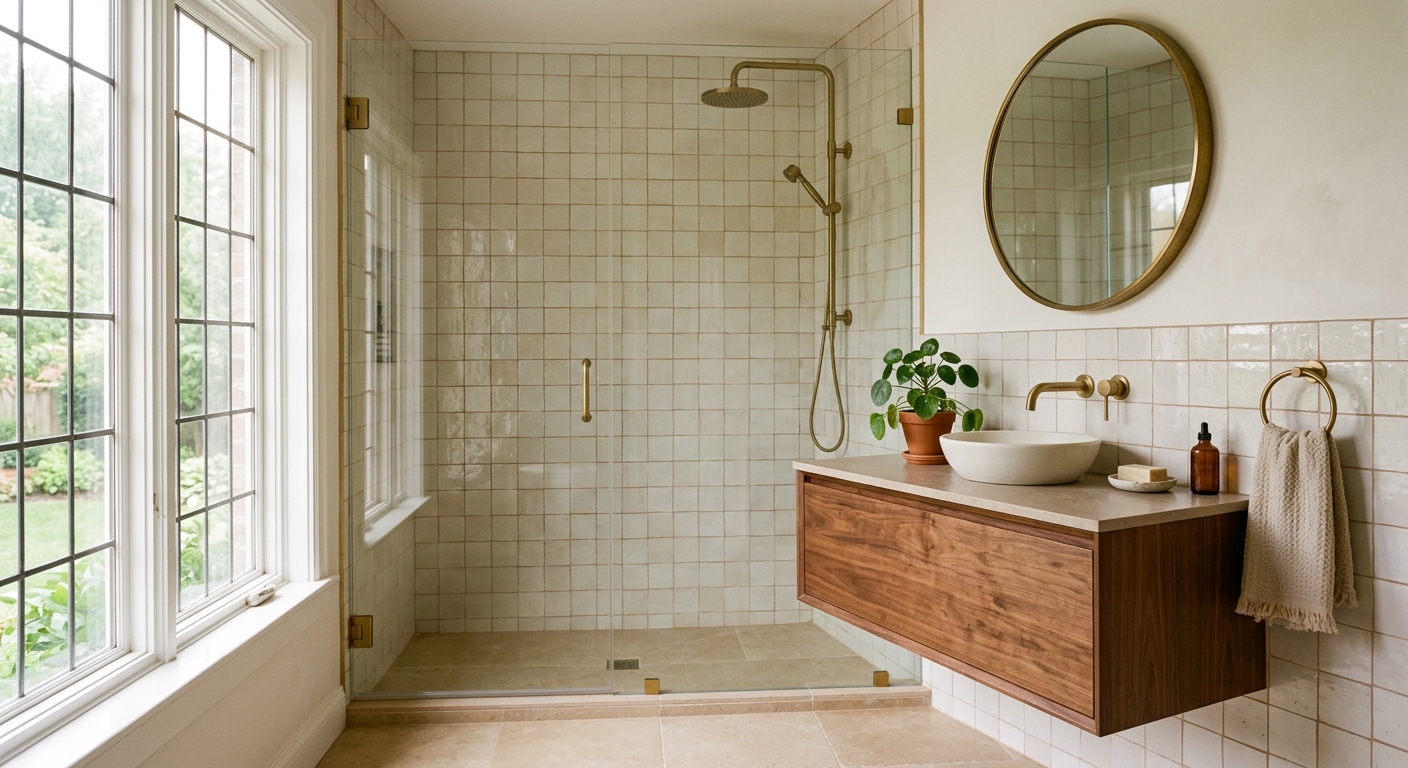
A dark 1970s bathroom rebuilt as the quietest room in the house: cream zellige, a walnut vanity, and a shower you do not have to duck into.
The brief
Miriam had lived on Orchard Street for nineteen years and had repainted the primary bath three times without ever liking it. The room was dark, the shower head hit her husband Tom at the collarbone, and the vanity was a builder-grade box with one working drawer. They did not want more square footage. They wanted the same 140 square feet to finally behave.
The design
We kept the plumbing walls where they were and spent the budget where hands and eyes actually land. The tub went away; a 60-inch curbless shower took its wall, tiled floor to ceiling in handmade cream zellige that catches the morning light instead of absorbing it. The walnut vanity floats, which makes a small floor read larger, and the aged brass fixtures will darken over the years instead of pitting.
The build
Six weeks, one crew, and one bathroom of the house's two out of commission. Waterproofing was inspected before a single tile went up, and Miriam approved the tile layout drawn on the actual wall before mortar was mixed. The final invoice matched the fixed proposal to the dollar.
The scope, line by line
- Curbless 60-inch shower, linear drain
- Handmade zellige tile, floor to ceiling
- Floating walnut double vanity
- Heated limestone-look porcelain floor
- Aged brass fittings throughout
- Pocket door to the bedroom
- Full waterproofing with third-party inspection
- Ventilation sized to the room, on a timer
Fictional project created for this design demonstration; all details illustrative.
Thinking about a primary bath?
See how we approach bathrooms
Small rooms with the highest stakes in the house. Waterproofing you never see, materials you touch every day.
Explore the service →
Or place your budget first
Place this budget on the map
The investment guide shows where $75k to $95k (illustrative) sits among our three tiers, and what moves a project up or down.
Open the investment guide →
Start here
Tell us about your house.
A first conversation costs nothing and commits you to nothing. Bring your questions, your rough budget, and the thing about your house that drives you crazy.
Start a conversation
Or call the studio: (555) 041-2100