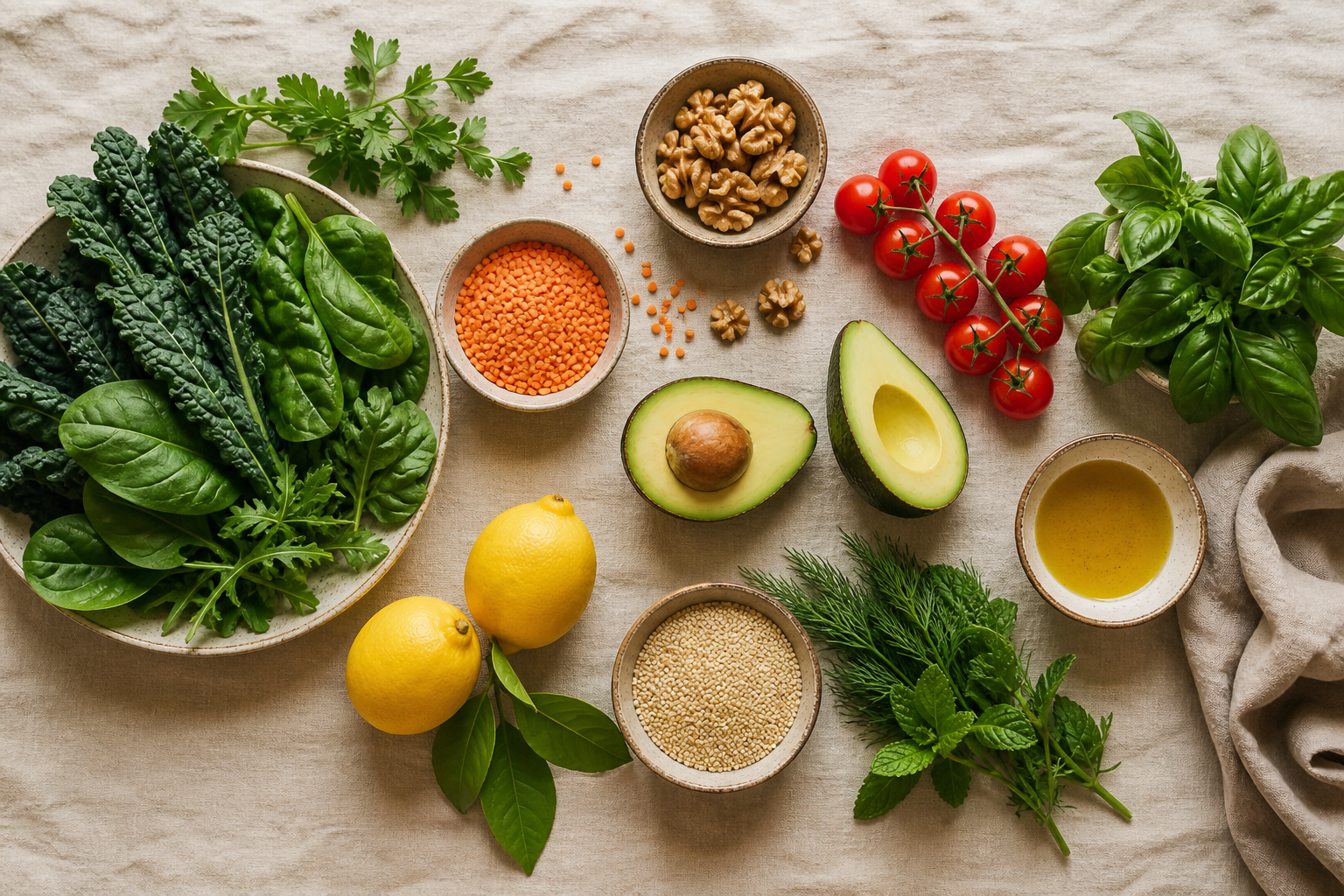
Why Fiber Quietly Runs the Show
Fiber rarely gets the spotlight, but it may be the most underrated part of an everyday diet. Here is why we care about it.
ReadA simple, flexible framework for putting together meals that keep you satisfied and energized, no measuring required.
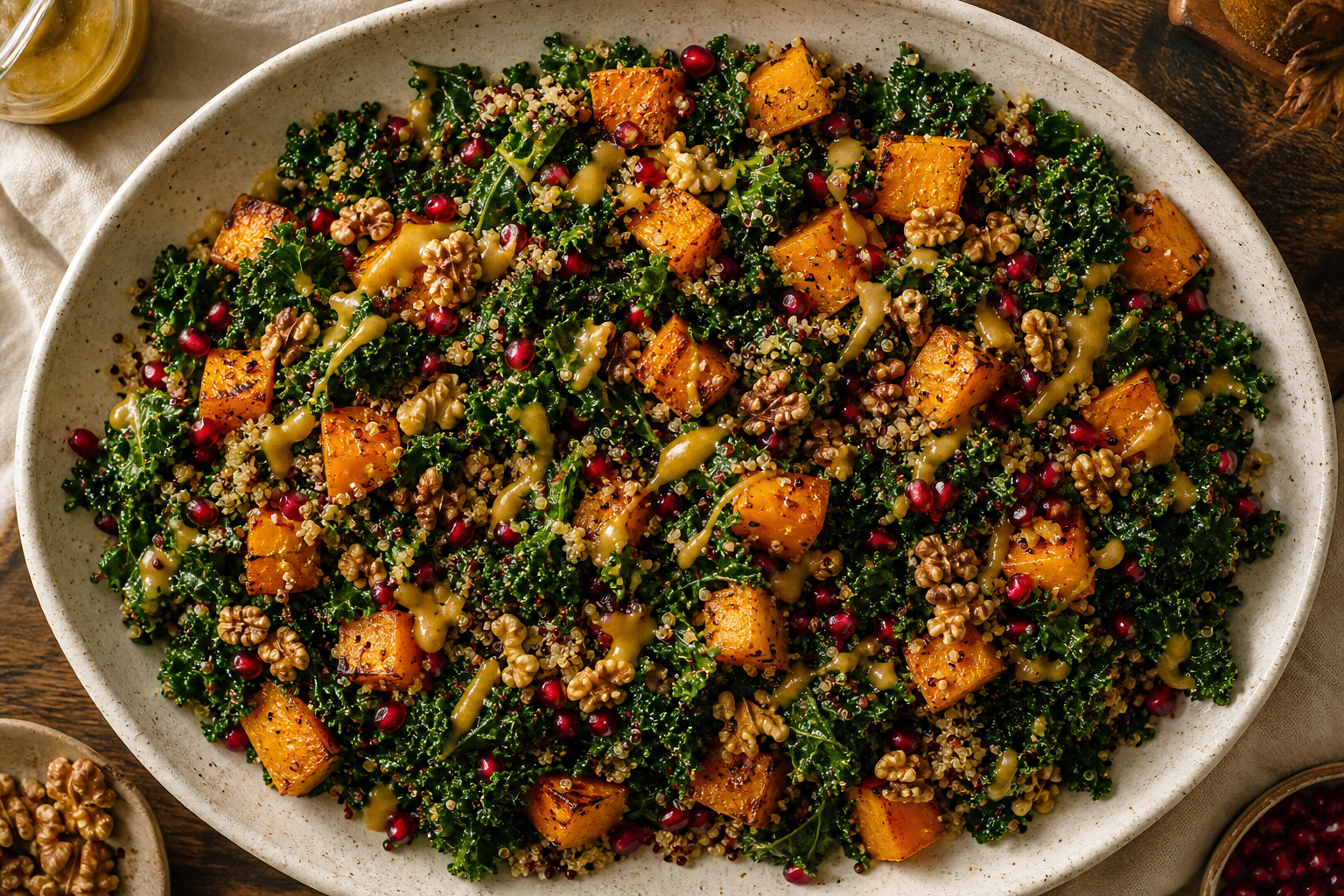
You do not need an app or a scale to eat well. You need a mental picture of what a good plate looks like, and a little practice putting it together.
The single most useful habit we teach is to fill half your plate with vegetables and fruit. It sounds almost too simple, but it quietly takes care of fiber, color, and volume, the things that help a meal feel satisfying and complete. Cooked or raw, roasted or fresh, the goal is variety across the week, not perfection at any one meal.
The next quarter of the plate is protein: beans and lentils, tofu and tempeh, eggs, fish, poultry, or a modest portion of meat. Protein helps meals hold you between sittings. Choose the ones you genuinely like, because the best plate is the one you will build again tomorrow.
The final quarter is for whole-food carbohydrates like grains, potatoes, or squash, and a drizzle of healthy fat rounds everything out: olive oil, avocado, nuts, or seeds. These bring flavor, staying power, and a sense of a meal that is actually a meal.
This is a guide, not a rulebook. Some plates will look exactly like this, and plenty will not, and that is completely fine. The point of a framework is to make good choices easier on ordinary days, not to add pressure to them.
Fiber rarely gets the spotlight, but it may be the most underrated part of an everyday diet. Here is why we care about it.
Read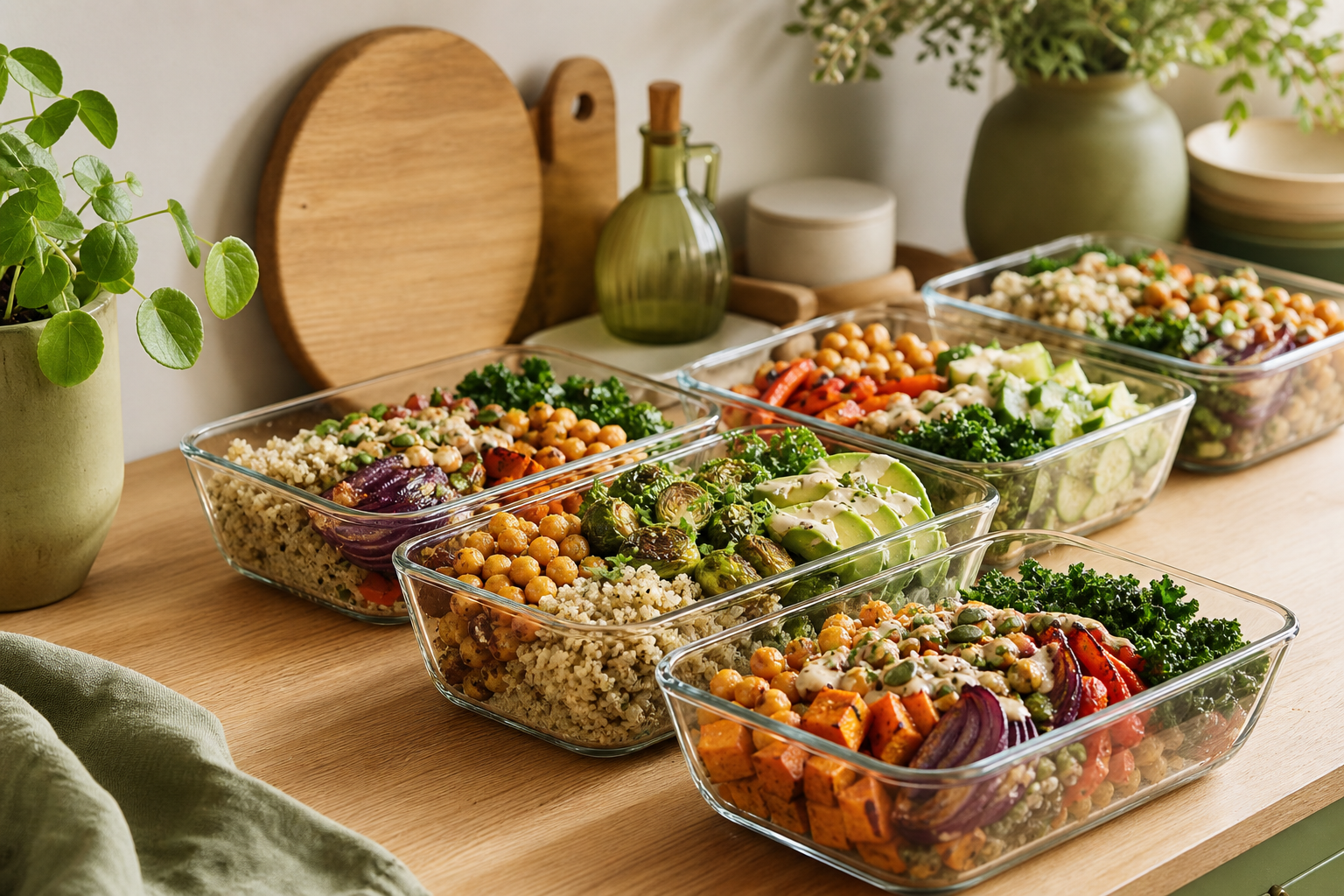
You do not need twelve matching containers and a lost Sunday. A lighter approach to prepping that actually sticks.
Read
Seasonal eating is less a rule and more a rhythm. It brings variety, flavor, and a nice connection to where you live.
Read