Home / Safety
Safety first, always
Zero is a program, not a poster.
Heavy civil work puts people next to live traffic, open excavations, suspended loads, and energized systems every shift. Our answer is a safety program run like an operations department: measured, staffed, and empowered to stop the job.
Five-year trend
The numbers, plotted honestly.
Experience modification and OSHA-style recordable rates, trailing five years. Every figure on this page is illustrative, and labeled so, because a demo should model the disclosure habit, not just the chart.
EMR by year · lower is better · illustrative
TRIR by year · lower is better · illustrative
Figures illustrative. Fictional demo company.
The program
How the work stays boring.
Plan the hazard out
Task hazard analyses every shift, engineered trench protection per run, crane lift plans reviewed by a second set of eyes, and traffic control designed by our own division, not rented as an afterthought.
Talk before iron moves
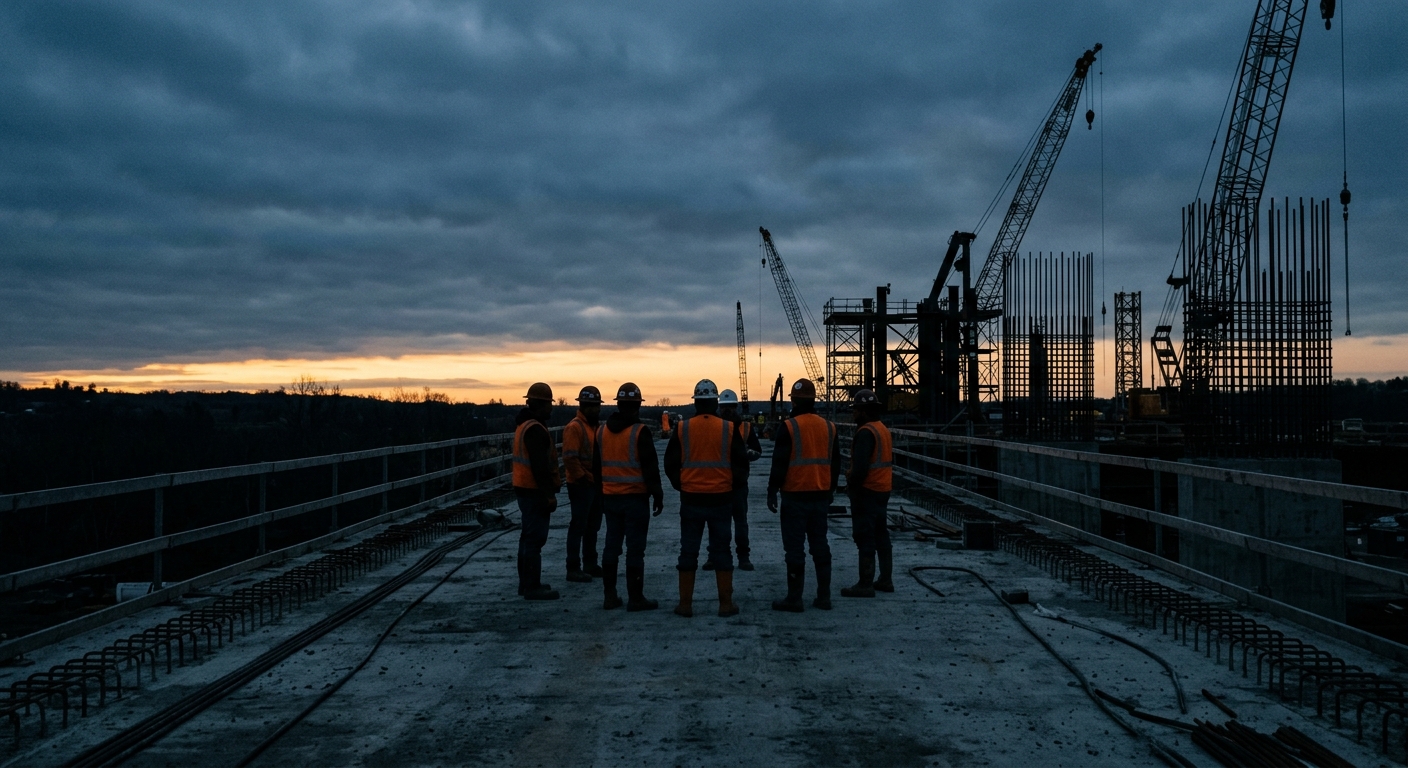
The 6:00 toolbox talk is non-negotiable and crew-led. Close calls from every Crossgrade site are read across the company weekly, because a near miss in Mesa County is a free lesson in Weld County.
Stop-work, honored
Any person on site can stop the work: laborer, operator, inspector, visitor. Every stop-work is closed out in writing, and using it well is a line item on foreman performance reviews.
- OSHA 30 supervisors, OSHA 10 minimum on siteIllustrative program standard
- Competent-person coverage for every excavationDocumented per shift
- Certified flaggers and TCS-supervised zonesIn-house traffic division
- Drug-and-alcohol program, DOT-styleAll craft and salaried
Start here
Owners: audit the habits, not the brochure.
Ask for our leading-indicator dashboard, sit in on a toolbox talk, and call the last three inspectors we worked under. That is the due diligence we would do.