The case for moving teeth slowly · from the studio journal
Quiet Force
There is a persistent fantasy in adult orthodontics: that somewhere there exists a program which is both fast and gentle, dramatic and invisible, finished by the wedding and stable forever. Every few years the fantasy gets new packaging. The biology underneath it has not changed, and the biology is the interesting part.
Teeth do not slide through bone. They are carried through it. Apply a small, sustained force to a tooth and the living tissue around its root remodels: bone resorbs on the pressure side, rebuilds on the tension side, and the tooth arrives in its new position housed in new architecture. This process runs on a cellular timetable that does not read marketing calendars. Push harder and it does not go faster; it goes worse.
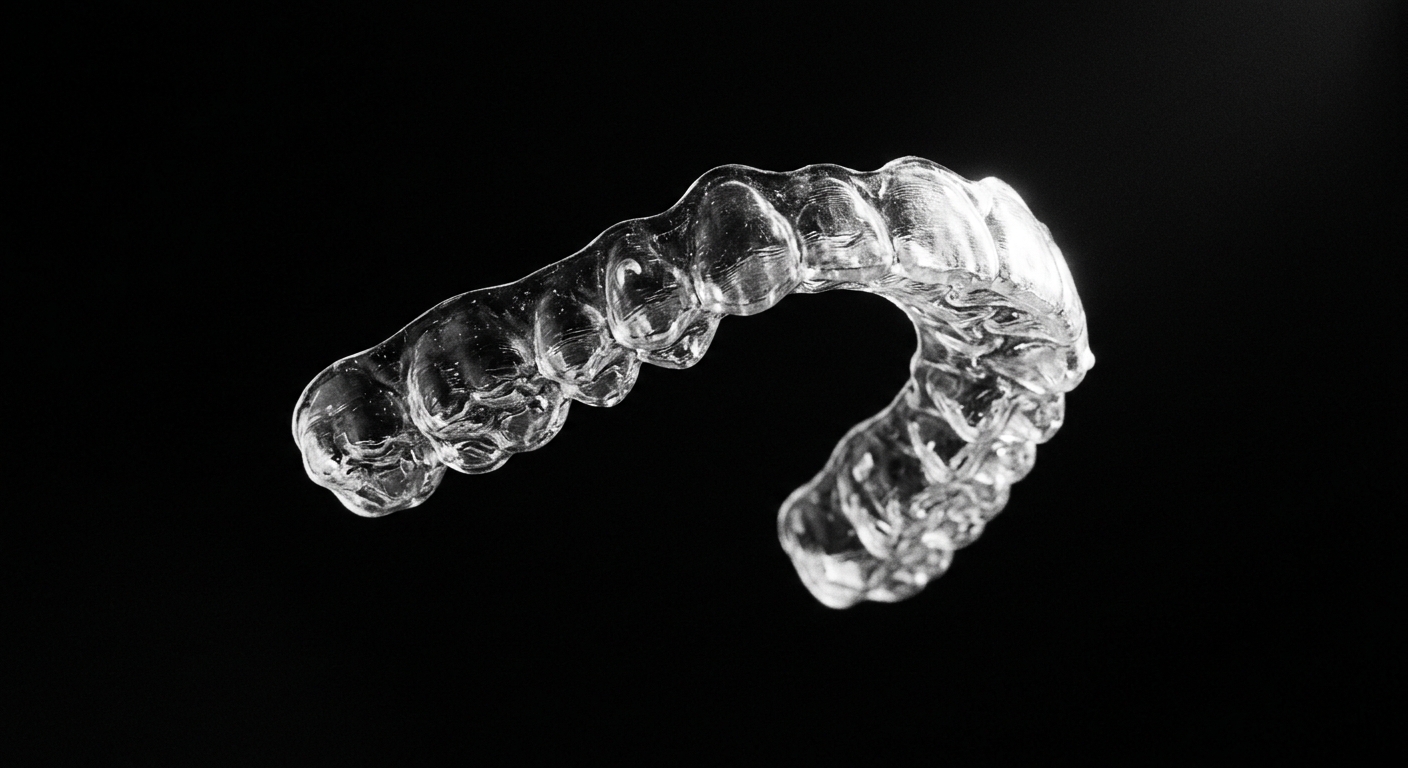
That is the entire case for what we call quiet force. A well-planned aligner program is a long sequence of very small arguments, each tray moving teeth fractions of a millimeter, each stage giving the tissue time to consolidate before the next request. It is unhurried on purpose. Slow is not a limitation of the method; slow is the method.
What modern tooling actually changed is not speed but honesty. A 7-micron scan means the starting position is a measurement, not an impression tray's approximation. Stage-by-stage simulation means you see the entire proposed route before you commit to the first tray. And progress scans at every checkpoint mean the plan is audited against reality: planned position versus actual position, plotted, discussed, adjusted when the two disagree. The trays are plastic; the discipline is the product.
The checkpoint is where programs succeed or quietly fail. Teeth are individual; some move on schedule, some lag, some anchor differently than any simulation predicted. A program that never compares plan to reality just accumulates error silently until the last tray does not fit the mouth it meets. A program that checks every six to eight weeks catches the drift while it is still a small correction.
And then there is the part nobody wants to hear at the start: retention. Moved teeth remember. The tissue that carried them into position needs time to mature around them, and without a retention plan the arch drifts back toward its old habits. We treat year-one retention as part of the program rather than an epilogue, because a result you keep is the only result that counts.
Typical programs here run six to eighteen months, reviewed in person, adjusted honestly. As with everything published by this fictional studio, this is editorial description, not clinical advice; a real plan follows a real examination. But if you take one sentence away, take this one: in orthodontics, the force you barely feel, applied patiently, is the one doing the most durable work.
Dr. Mara Voss
Founder · ENAMEL Studio · fictional person