Why a veneer is an optics problem · from the studio journal
Light Architecture
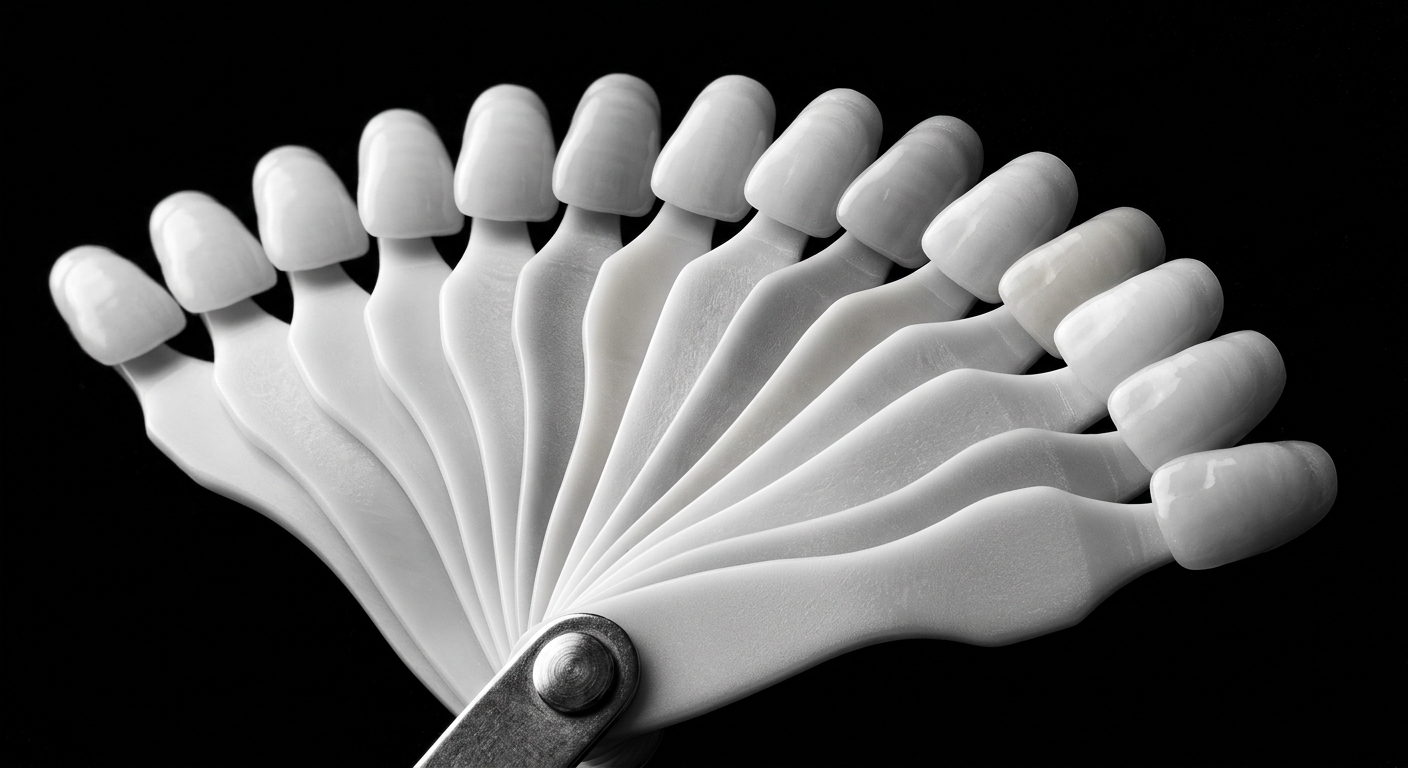
Stand in front of a mirror in three different rooms and your teeth will be three different colors. Kitchen fluorescent, bathroom LED, late-afternoon window light: each one moves through enamel differently, and each one reports a different answer. This is the first thing we tell anyone who asks for veneers, because it reframes the entire project. You are not choosing a paint chip. You are choosing how a translucent material should behave under every light you will ever stand in.
Natural enamel is a layered optical system. The outer surface reflects a little, transmits a lot, and hands the rest down to dentin, which glows warm and sends some of that warmth back up through the enamel above it. The result is depth: a tooth looks slightly different at its edge than at its neck, slightly different straight-on than at an angle. Flat, uniform white has none of this behavior, which is exactly why an over-opaque veneer reads as dentistry from across a room even when the shade tab technically matches.
So the work of a good veneer is architectural. The ceramist decides where light should enter, how far it should travel, and where it should be sent back. In practice that means layered porcelain: a more opaque core where structure demands it, translucent increments toward the incisal edge, surface texture that scatters highlights the way a fifty-year-old tooth refuses to. None of this can be specified on a lab ticket that says B1 and a mailing address.
This is the argument for keeping ceramics in the building. When the bench is one room from the chair, the porcelain is checked against the patient's own face, in the same light, on the same afternoon. A half-value adjustment at the neck of one incisor takes minutes instead of a courier week. The try-in is a working session, not a reveal.
It is also the argument for restraint. The most convincing veneer is the one carrying the least material necessary to correct the light, which is why conservative preparation is a design principle here rather than a marketing line. Enamel is the best optical substrate anyone has ever manufactured; the less of it you remove, the more of the finished result the tooth itself gets to perform.
When people ask what shade they should choose, the honest answer is that shade is the last decision, not the first. First comes the map: photographs under calibrated light, the existing enamel's translucency pattern, the way the neighboring teeth behave. Then porcelain is built to continue that behavior, brighter if you want it brighter, but always obeying the same physics. The goal is a smile that survives every room in your life, including the unflattering ones.
Everything on this page, as everywhere on this site, is illustrative editorial for a fictional studio, not clinical advice. But the physics is real, and it is the reason we named the veneer program what we named it. We are not painting teeth. We are building small architecture for light.
Dr. Mara Voss
Founder · ENAMEL Studio · fictional person