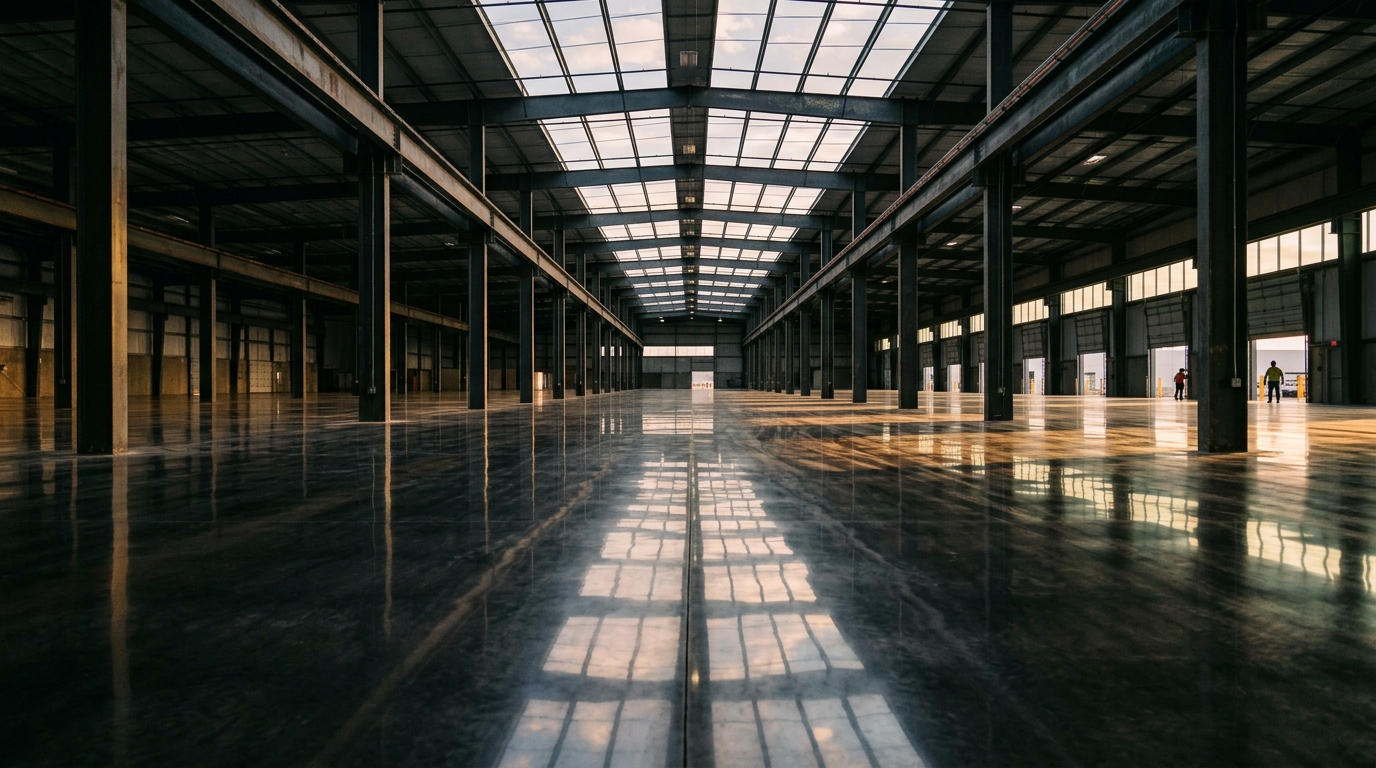
The system, not just the shine
Planetary grinders take the slab through metal-bond and resin-bond stages, with lithium-silicate densifier hardening the surface between passes and a stain guard burnished in at the end. Because we also pour slabs, we polish knowing what is underneath: a floor placed flat and cured right polishes in fewer passes and holds its gloss. Best case is one contract for both, so the pour is planned for the polish from the first truck.
Specified by the numbers
Every proposal names an aggregate exposure class (A cream, B fine salt-and-pepper, C full aggregate), a finished grit level from 400 satin to 3,000 mirror, and a target gloss reading measured at 60 degrees. A distribution center aisle might spec class B at 800 grit, 50-plus gloss; a showroom, class C at 3,000 grit, 70-plus with dye. We verify with a calibrated gloss meter on a marked grid and file readings in the closeout book. Demo figures illustrative; the habit of measuring is the product.
Dye, joints, and the details that show
Integral dye goes down between grit stages so color rides in the surface, not on it. Joints are filled with semi-rigid epoxy and shaved flush so forklift wheels stop unraveling the edges. Existing slabs get moisture testing and a grinding-depth survey first, because the honest answer is sometimes that your slab wants a topping, not a polish.
Owning the floor afterward
Polished concrete is the cheapest floor you will ever own if it is maintained like a floor and not like a countertop. Closeout includes a one-page maintenance card: neutral cleaner, auto-scrubber pads by grit, re-burnish intervals, and the number to call before anyone lets an acid-based cleaner near it.