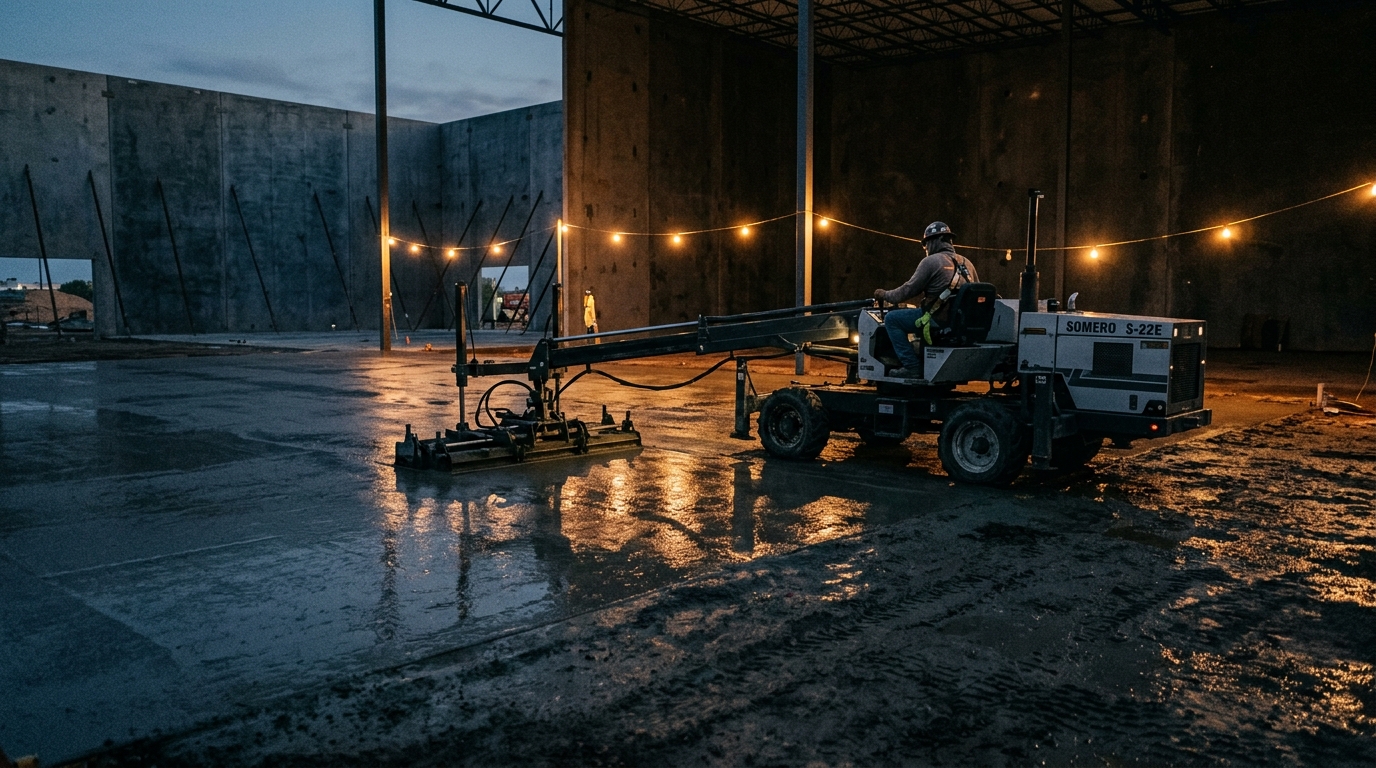
What we place
Slabs-on-grade from 4,000 to 450,000 square feet, slabs on metal deck, truck aprons, dolly pads, and site paving. Interior warehouse slabs ride our two Somero-class laser screeds; exterior flatwork runs conventional wet screeds with the same cylinder and slump discipline. Typical warehouse spec is 4,000 to 4,500 PSI with a mid-range water reducer and macro-synthetic fiber or mesh per the engineer.
Flatness is specified, measured, filed
We bid to your FF/FL spec and state our own working targets on the pour card: FF 50 / FL 35 overall floor values on a standard distribution slab, and FF 100-plus in defined superflat aisles for VNA racking. Profiles are taken with a calibrated floor profiler inside the 72-hour ASTM E1155 window by an independent tech. On our last comparable pour the composite came in at FF 68 / FL 46 against a 50/35 spec. Illustrative, like every demo figure here, but the method is real: numbers in writing before and after.
Joints decide how a slab ages
Curling and random cracking are joint-design failures, not concrete moods. We submit a joint layout drawing on every slab: saw-cut spacing at 24 to 30 times slab thickness, dowel baskets at construction joints, diamond plates where forklifts cross, and early-entry saws on the slab within one to two hours of final finish. Under it all: a 15-mil vapor barrier, lapped and taped, because flooring claims start below the concrete.
Cure is a schedule item
Every slab gets a named cure method on the pour card: seven-day wet cure for critical floors, ASTM C309 or C1315 compound where schedule rules, with polyethylene against summer wind. The cure window sits on the master schedule like any other trade, because a slab that cures fast and dry is a slab you will meet again in a claim.