Scope, end to end
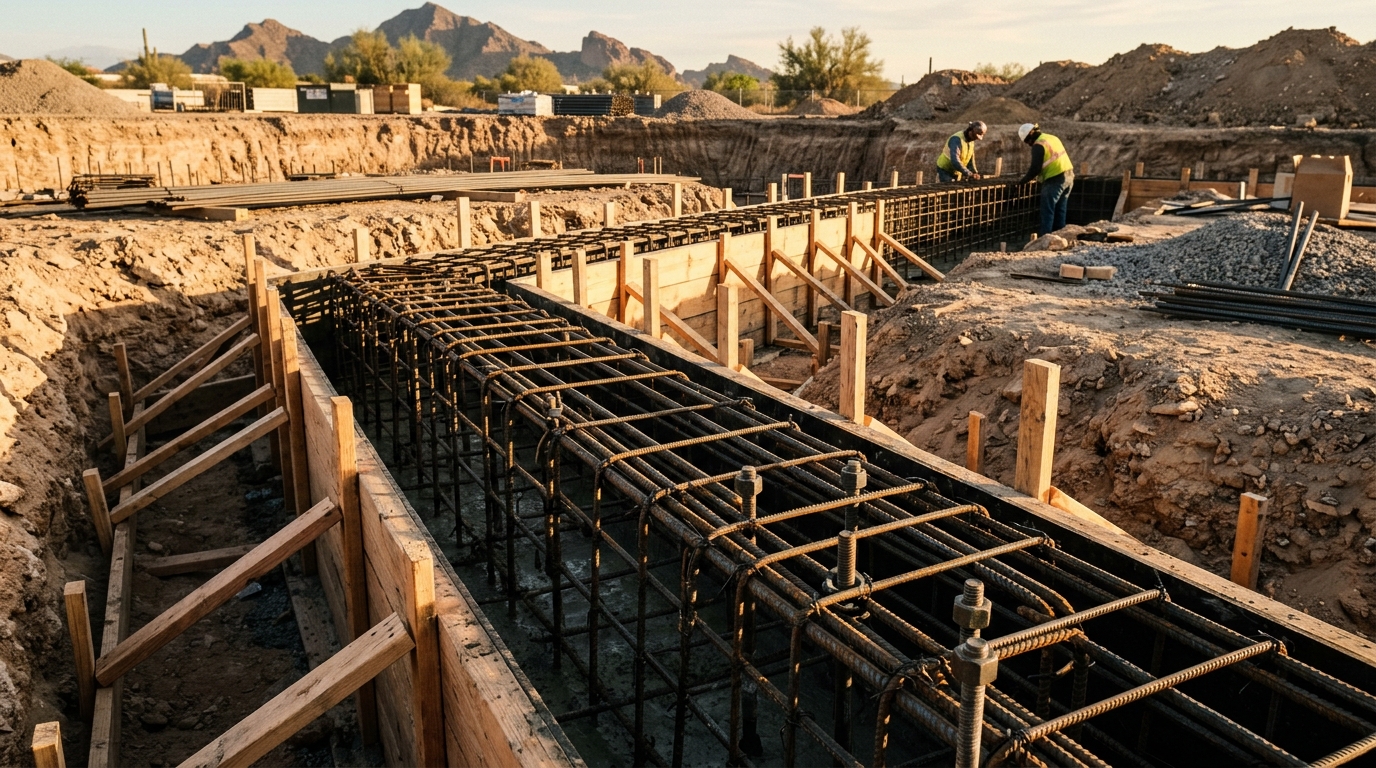
Spread footings, continuous footings, stem walls, grade beams, pier caps, and post-tension slabs-on-grade for custom residential, light commercial, and tilt-up building pads. We take the job from layout to anchor bolts: our own crews set forms, tie steel to the placing drawings, coordinate PT tendon stressing, and hold embeds and bolt patterns to ACI 117 tolerances so the framer or steel erector starts square.
Sulfate soils are the local exam
Large parts of the Valley test moderate-to-severe for sulfates, which quietly eat the wrong concrete. Our default foundation mixes run Type V or Type II/V cement with a maximum 0.45 water-cement ratio for severe exposure, and we keep the geotech report on the pour card so the mix matches the soil class under your actual footprint, not a countywide guess.
Hot-weather placement, planned not improvised
From May to September we batch against ACI 305 hot-weather limits: concrete placed below 95 degrees, chilled batch water or ice when the forecast demands it, evaporation retarder on deck, and 4:30 a.m. first trucks so footings are struck off before the wind comes up. Every summer pour gets a written hot-weather plan, and the superintendent logs concrete temperature at the truck, at placement, and at finish.
Verification you can hand to a lender
Cylinders on every pour, broken at 7 and 28 days by an independent lab, with results filed to the job binder. Anchor bolts and embeds are shot with a total station before and after placement. If a number misses, you hear it from us the same day, with the remediation plan attached. Illustrative demo figures, but that is the habit being sold.