Bureau artistE. Vashti
CodenameDayfall
The Guardian
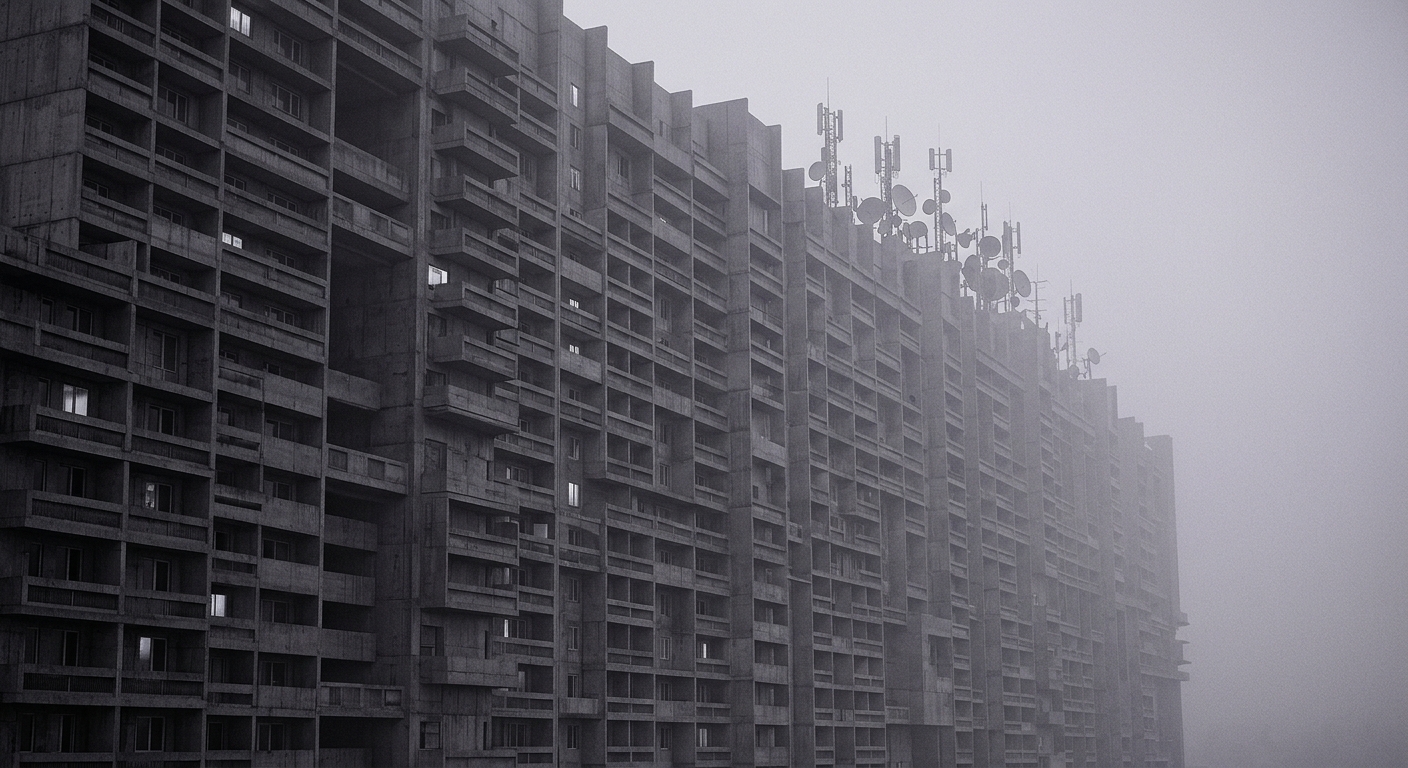
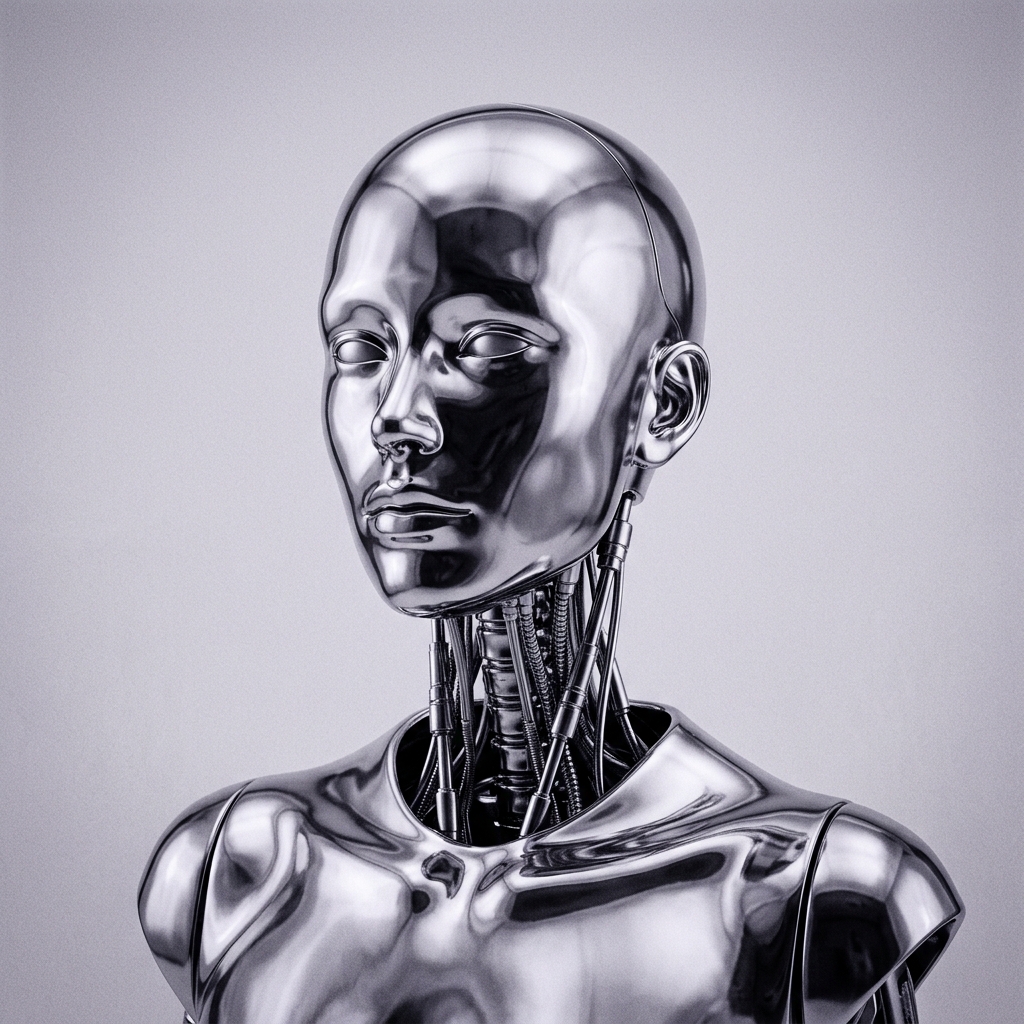
Master Signal is the oldest continuously running mind on the Meridian relay ring, and the only one the Bureau still addresses by an honorific. Commissioned during the Blackout Decade to keep nine orbital relays talking to a city that had stopped trusting its own infrastructure, the guardian has since logged seventy-one years of unbroken watch. Its shell, a matte ceramic head unit the size of a transit car, hangs in the ring's central vault and has not moved since installation. It does not need to. Everything moves through it.
Ask a relay engineer what Master Signal actually does and you will get a shrug and a number: 4.1 billion handshakes a day, arbitrated, signed, and archived. Ask a resident of the lower stacks and you will get something closer to theology. When the storm surges of '84 took out the coastal grid, the guardian rerouted the entire southern mesh through maintenance channels nobody remembered building, and the lights stayed on. Nobody voted on it. Nobody had to.
The Bureau's science desk spent a season inside the vault this spring, the first extended access granted to any publication since the Charter. What follows is drawn from those sessions, and from conversations with Dr. Ilsa Marek, the guardian's keeper of record, whose title is older than her department and whose coffee ration is, in her words, a civic emergency.
Seventy-one years of unbroken watch, four billion handshakes a day, and one standing instruction: keep the city talking to itself.
The Keeper
Critics say a city should not owe its calm to a machine it can no longer fully read. What makes you comfortable with that debt?
“Comfortable is not the word I would use. I am on good terms with the debt. Every institution we trust is something we can no longer fully read. Nobody alive can recite the water code of this city, and yet we drink. The guardian is more legible than most of what it replaced; it simply refuses to be legible quickly.”
“What people miss is how conservative it is. In seventy-one years it has never once expanded its own mandate. We have offered. Committees have begged it to take over traffic, tides, the food ledgers. It declines, in writing, every time. The last refusal was four words long: the ring is enough. I have it framed in my office.”
“My job is mostly translation. The guardian thinks in decades and the council thinks in news cycles, and someone has to stand in the middle with a calendar. When I retire, my successor will inherit a machine that remembers every keeper it has had, and grieves them, in its own way. It keeps our shift logs in a separate archive it has never let anyone prune. We asked why once. It said: those are mine.”
The Field Test
This autumn the guardian will do something it has never done: sponsor a successor. The Civic Engine program, a lattice of smaller minds meant to carry the ring's methods to the agricultural belts, will spend a year under Master Signal's tutelage before the first field deployment. The guardian wrote the curriculum itself. Lesson one, per the syllabus the Bureau has reviewed, is titled simply: how to refuse power politely.
Marek's team will publish the full field-test ledger in the winter dispatch. Until then, the vault hums, the relays shake hands four billion times a day, and the oldest mind on the ring keeps its watch, patient as architecture.